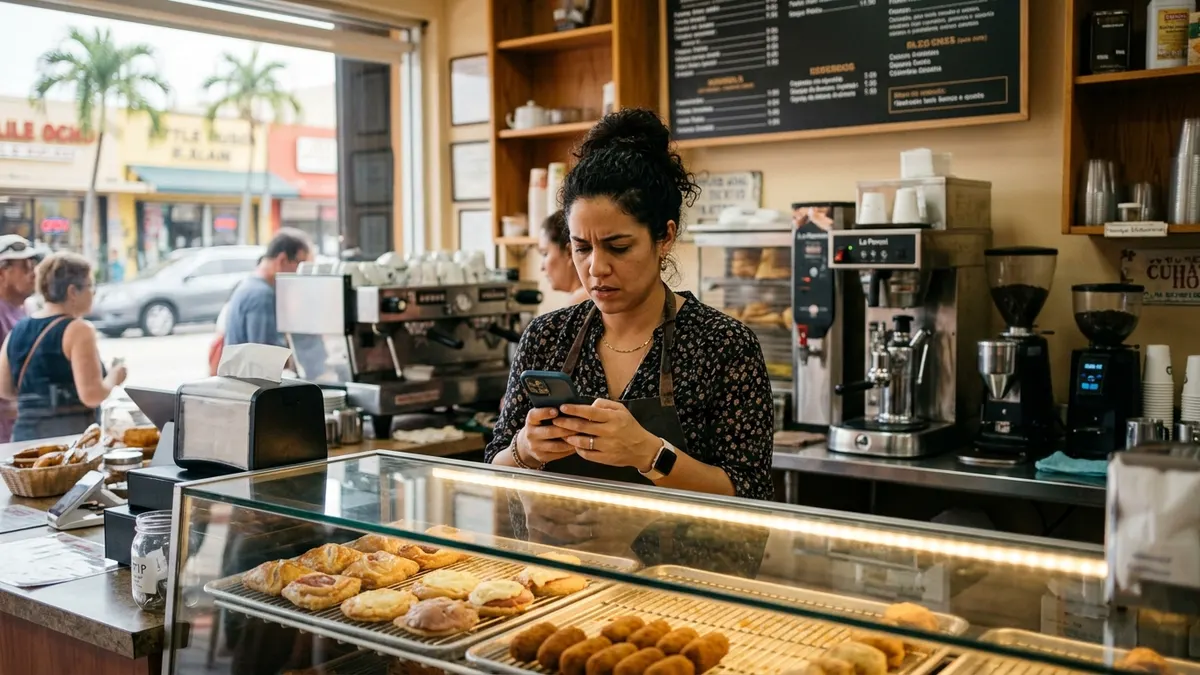
Someone messages you on WhatsApp asking about your service. You're busy, you put it off "for a bit," and that bit turns into four hours. By the time you finally reply, either they don't answer, or they say they "already went with someone else."
It wasn't a bad customer. It was a slow reply.
The problem isn't WhatsApp. It's what happens around WhatsApp
For most small businesses in Miami — a market where WhatsApp is often the default way customers reach out, not an afterthought — it's the channel where the sale actually closes. The problem isn't the tool — it's that there's rarely a process behind it. Messages get mixed in with personal chats, group threads, and notifications for everything else. Nobody's clearly responsible for answering if the owner is busy. And there's no record of who asked what and whether they were followed up with.
That's how customers slip away: not because they lost interest, but because there was no system on your end.
The 4 ways a WhatsApp lead gets away from you
1. Nobody replies in time. The message lands at a busy moment (weekend, after hours, while you're helping another customer), and by the time someone sees it, the person already found what they needed elsewhere.
2. It gets buried under other messages. With no labels or way to flag "this is still pending," a message from a potential customer looks exactly the same as one from a family group chat. It gets buried.
3. You reply, but then it just sits there. You answered the first question, the person said "let me think about it," and nobody followed up again.
4. Nothing gets recorded anywhere. If you switch phones, delete the conversation, or someone else on the team also handles WhatsApp — there's no single place to see that customer's full history.
What you can do without spending on tools
Before thinking about automation, there are process fixes that cost nothing:
- Define who replies and during what hours. If it's just the owner, be explicit about the latest time you commit to responding — a realistic window beats leaving the expectation open-ended.
- Use WhatsApp Business's native labels. "New lead," "Quote sent," "Awaiting reply" — it's free and already keeps a message from getting visually lost among the rest.
- Turn on an away message with a clear expectation. "Thanks for reaching out, we reply within X hours" reduces the anxiety of waiting, even if it doesn't speed up the actual response.
These fixes solve part of the problem. What they don't solve is what happens once message volume outgrows what one person can handle by hand, or when follow-up after the first contact still depends on someone's memory.
When it's actually time to automate
If you recognize yourself in more than one of these, you've already passed the point where manual fixes are enough:
- You reply late often, not as the exception.
- You have more than one channel (WhatsApp, Instagram, a web form) and each one lives in a different place.
- Someone on your team asks "did you already message so-and-so?" and nobody knows for sure.
- Customers who message over the weekend wait until Monday for a reply.
That's where a system like GoHighLevel comes in: a single inbox that brings together WhatsApp, forms, and other channels, with instant automated replies for the first touch and scheduled follow-up for everything after — without losing the personal feel, because the conversation gets handed to a real person the moment it's needed. Here's how we implement it at SURCA.
How many WhatsApp messages went unanswered for your business this month? We'll help you see, with real numbers from your own process, how much is slipping through and how easy it is to close that gap. Request a free diagnosis.